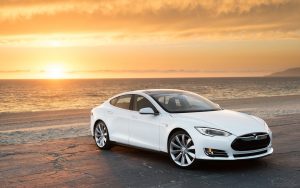
Recalls: Tesla Model S
Overview
Manufacturers, or importers, issue recalls for defects or faults which have the potential to cause injury. Generally, manufacturers will inform the original buyers if their vehicle is subject to a recall and of the steps required to remedy the defect or fault. Please note that the recalls below (if any) are for Australian-delivered vehicles only. Furthermore, the number of recalls should not be taken as an indication of a model’s reliability or its safety more generally.
Recalls: Tesla Model S
Tesla Model S: seatbelt may not be connected to lap pre-tensioner
In November 2015, a recall was issued for Tesla Model S vehicles because the seatbelt in one of the front seats may not be properly connected to the outboard lap pre-tensioner. As a result, the seat belt may not able to properly restrain the occupant in the event of a collision, increasing the risk of injury (PRA 2015/15058).
2016 Tesla Model S: park brake may not release
In May 2017, a recall was issued for Tesla Model S vehicles that were manufactured from 22 February 2016 to 7 October 2016. In these vehicles, a faulty gear could prevent the parking brake from releasing. Furthermore, if the gear fractured prior to full parking brake engagement, the affected parking brake calliper may have less than the intended holding force. For the VINs of the recalled Tesla Model S vehicles, please see PRA 2017/16039.
2012-16 Tesla Model S: loss of power steering assistance
In April 2018, a recall was issued for Tesla Model S vehicles that were manufactured from 31 May 2012 to 9 April 2016. When exposed to high-corrosion environments, aluminium bolts which attached the power steering gear assist motor to the gear housing could corrode and weaken. If these bolts fractured, the power steering gear assist motor could move – this would cause the transmission belt to slip and cause power steering assistance to be reduced or lost. Reduced or lost power steering assistance would require greater steering effort, especially at low speeds, and this could increase the risk of a collision. For the VINs of the recalled vehicles, please see PRA 2018/16713.
2014-16 Tesla Model S: Takata airbag recall
In January 2019, recall campaign SB-19-20-001 was issued for Tesla Model S vehicles that were available for sale in Australia from 1 January 2014 to 31 December 2016. These vehicles had Takata airbags and, over time, propellant wafers inside the airbag could absorb moisture. In the event of airbag deployment, excessive pressure inside the metal airbag inflator housing could cause it to explode or rupture, such that metal fragments may be projected through the airbag and into the vehicle’s cabin. These metal fragments had the potential to cause serious injury or fatality. For the VINs of the recalled Tesla Model S vehicles, please see PRA 2019/17269.
2014-20 Tesla Model S: incorrectly positioned secondary bonnet latch
In January 2022, recall campaign SB-21-11-003 was issued for 2014-20 Tesla Model S vehicles, including all variants within the model range. Due to a manufacturing issue, the secondary bonnet latch may have been located in the incorrect position and this could prevent the secondary latch from engaging as designed. If the primary latch was released and the secondary latch was not engaged, the bonnet could open without warning; this circumstance increased the risk of a collision and injury to vehicle occupants and other road users. Owners were to schedule an appointment with Tesla Service through their mobile app after receiving a notification. For the VINs of the recalled vehicles, please see REC-005041.
2017-20 Tesla Model S: reduced or no power steering
In November 2022, recall campaign SB-22-00-014 was issued for 2017-20 Tesla Model S vehicles. Due to a recently changed software calibration, the Electronic Power Assist Steering (EPAS) system may not operate as intended. This could result in reduced or no power steering assistance, requiring greater steering effort from the driver (particularly at low speeds). Upon experiencing reduced or no power steering assistance, an audio alert would trigger, and a visual alert would appear on the instrument cluster. To fix, Tesla deployed firmware release 2022.36.5 to affected vehicles. Owners could also contact their authorised Tesla dealer to make an appointment to have the firmware updated. For the VINs of the recalled vehicles, please see REC-005562.
Problems and faults: Tesla Model S
Overview
This section identifies potential problems, causes and fixes based on the experiences of owners and repairers, online sources and technical service bulletins. This information is provided solely for reference purposes and AustralianCar.Reviews recommends that only properly qualified persons carry out repairs or modifications. Furthermore, the number of items below should not be taken as an indicator of a model’s reliability or the frequency with which they may occur.
To report a problem or fault to the AustralianCar.Reviews team, please use the Contact Us form. Note that AustralianCar.Reviews does not offer advice on automotive problems or disputes; such enquiries will not receive a reply. For vehicles purchased from dealers after 1 January 2011, please see our Australian Consumer Law fact sheet.
Problems and faults: Tesla Model S
No troubleshooting information is currently available for the Tesla Model S.